 wrnty
Is an extended warranty worth it? Five checks before you pay
You are at the till with a new machine, and the offer is there: three more years of cover for a fraction of the price. The honest answer is sometimes — and you can work out which before you pay.
Often not, but it depends on what you already have. An extended warranty is a separate, optional contract, and it only adds value if it covers something your manufacturer warranty, your statutory rights, or your card or home insurance does not, at a price below the likely repair cost. Compare those layers first.
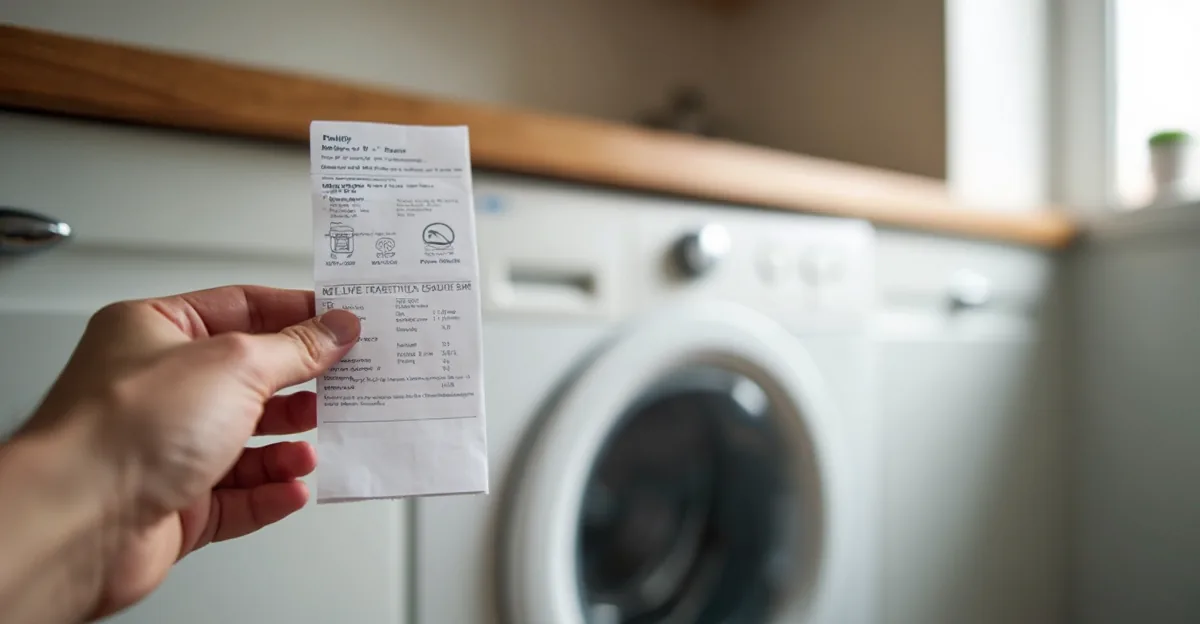
You have seconds, no paperwork, and no way to compare the offer against anything you already own. This post fills that gap: what the offer actually is, the cover you usually already hold for free, and a five-check test to run at the till, or after the phone call that arrives years later.
What are you actually buying with an extended warranty?
The short version: a separate contract that costs extra and may cover different things than the warranty that came with the product.
In US consumer guidance, the product sold at the till is not the same as the warranty that comes with the product: it costs extra, it is sold separately, and it may cover different things. The label "extended warranty" is a loose one — it often describes something that legally is a service contract or an insurance-like product, and the rules for it vary by country.
Two consequences follow. First, the person who pays when the product breaks is not necessarily the person who made the product — the contract may be backed by a third-party company you have never heard of, and US consumer guidance puts it this way: the value of the contract is only as good as the company responsible for the coverage. For phones and laptops, the same test with different numbers is in what phone and laptop warranties actually cover. Second, the cover is only as wide as the contract says — it may cover fewer parts, fewer failure types and fewer repairers than the manufacturer's own warranty. That is not a reason not to buy; it is a reason to read the document before you sign it.

What do you already have before you pay?
This is the layer most till offers skip, and the one that changes the answer most. Before paying for more cover, inventory what you already hold:
- The manufacturer's warranty. Most electronics and many appliances carry one, often around a year — it varies by product and country, and it is already in the price you paid.
- Your statutory rights. On top of any manufacturer warranty, most countries give you a separate legal right against the seller for goods that turn out to be faulty. In the EU, that is a legal guarantee of at least two years on every purchase, and a shop's commercial guarantee cannot shorten it. The UK and the US have their own time limits, so check the rules where you live — for your own purchase, the retailer's written terms and your local consumer body are the places to ask. How those rights work when something breaks is worth keeping.
- Possibly some card or home-insurance cover. Some credit cards and some home contents policies include a short repair or replacement cover. It varies entirely by card, issuer and policy, so the only reliable check is to read your own terms — and do not assume a plan would not overlap with it.
| Layer | What it usually covers | Where to check |
|---|---|---|
| Manufacturer warranty | Defects in materials and workmanship, for the stated period | The warranty card or document that came with the product |
| Statutory rights | Faulty goods, for the period your country's law allows — at least two years in the EU | Your local consumer body; the rules differ by country |
| Card or policy cover | Sometimes repairs or replacement for a period after purchase | Your card terms or insurance policy |
If you are unsure what the manufacturer warranty alone covers, what a warranty actually covers on phones, laptops and gadgets is a good reference.
Is an extended warranty worth it? Five checks
Run these in order; any one can sink the deal. A check it clears means the plan survives; a check it fails is a reason not to buy.
1. Does it cover anything you do not already have?
US consumer guidance is direct: it is not a good value if the contract does not offer more coverage than the warranty that came with the product. Line the two documents up side by side; a three-year plan that repeats the one-year cover and adds nothing is paying three times for the first year. If the plan adds real years, it clears this check — but only if those years are not already inside the statutory rights you counted above.
2. How likely is the repair, and how costly would it be?
A plan might not be worth the cost if the product is not likely to need repairs. Weigh complexity — a product with expensive parts like a motor or a control board costs more to repair than a few cheap parts held together — and the model's track record in product reviews. A model reported to fail in one predictable way is a real risk; a widely reported trouble-free one is not.
If something is already broken and you are deciding between repairing and replacing it, the arithmetic for that moment is in repair it or replace it?.
3. Who stands behind it, and how do claims work?
Name the company responsible for coverage and check its reputation before you sign. Then work out the claims path, because a difficult path erodes cover as much as an exclusion does: who does the repair, do you ship the product or take it back to the store, how long reimbursement takes, and what happens if the company is gone when the product breaks.
4. What does it cost in full?
The till price is the first cost, not the last. US consumer guidance lists the ones to ask about: a deductible on every claim, fees per service beyond it, shipping to a repair centre, a transfer fee if you sell mid-cover, and limits on reimbursement — the provider may cap the repair cost rather than pay it in full. Add them over the whole period, divide by the years, and compare the per-year figure against keeping the same money in the bank.
5. What does it exclude?
If it is not listed in the contract, assume that it is not covered — US consumer guidance gives that rule, and it is worth writing on the back of the receipt. The exclusions that matter most: accidental damage (some plans exclude it, so check — for the products people most often break, this one decides a lot), wear parts like batteries and filters, and missed maintenance, where some contracts deny a claim if you skipped their routine service.
When does it tend to pay, and when doesn't it?
| Situation | Tends to be worth considering | Tends not to be |
|---|---|---|
| The product | Expensive, complex, costly to repair | Cheap, simple, replaceable |
| The track record | Reported failures in a predictable way | Widely reported as trouble-free |
| The provider | A company you can find reviews for | An obscure name with no paper trail |
| The exclusions | Narrow, and none hit the parts you fear | A long list, or none of the failure modes you expect |
| The per-year cost | Below what the likely repair would cost per year | Above it, once deductibles are in |
And the alternative the till never mentions: set the money aside yourself. A savings account for future repairs can be the better option. You keep the money and the choice; when the product breaks, you decide with the full budget in front of you.
A worked example: a washing machine at the till
A washing machine at the upper end of the price range. One-year manufacturer warranty. Till offer: three more years, at roughly a sixth of the price.
Check 1: the plan adds two years the manufacturer does not cover — it clears (in the EU, part of that period is already inside your legal guarantee against the seller). Check 2: a washing machine's repairable failure is usually the motor or the control electronics — the expensive kind. It clears, if the model is not one reviews call rock-steady. Check 3: a company with no reviews you can find points against buying. Check 4: with a per-claim deductible and a capped reimbursement, the till price understates the real cost. Check 5: if "normal wear" is excluded without a definition, the three years are thinner than they look.
If it survives all five, it is a fair decision, and the savings-account version is still on the table. Now run the same checks on a kettle with a one-year warranty and a two-year offer. Check 2 does the work: the repair is cheap, the machine is simple, replacing it costs little — it points against buying. The plan fails the test; the check is doing its job.
What about the call years later that says your cover is about to expire?
A year or three after you buy a product, the offer can arrive again — by phone, post or email — from a company that sounds almost like the one you bought from. US consumer guidance describes exactly this pattern: marketers usually unrelated to the company you dealt with, using lines like "your warranty is about to expire" and asking for a first payment before explaining the contract. The calls may be illegal in the US where you have no connection with the company calling; rules differ elsewhere, so when in doubt check with your local consumer body. The safe move is the same: hang up, find the seller's real contact from the product or the receipt, and ask them whether the offer is genuine. If you cannot verify the company behind the cover, that is a complete answer.
If you do buy one, what should you keep?
A plan you cannot find is a plan you cannot use. The claim-ready kit is short: the receipt for the product and, if separate, for the plan; the contract with its start and end dates and exclusions; the serial number from the product's label; and a note of who stands behind the cover and how to reach them.
A photo of the contract in your camera roll, a labelled folder, a note with the end date — any of these works. How to organise receipts so you can actually find them covers the general system. wrnty is one app that does the same job for warranties specifically: you record the product, the price and the plan's end date, and attach a photo of the contract — and on its Premium tier, a one-time purchase rather than a subscription, it can remind you before the cover expires. It is an iPhone and iPad app, free for two items, with your data on your device.
When the day comes, the same kit is what makes a claim go smoothly or stall — how to make a warranty claim has the step-by-step.
The short version
An extended warranty is a separate contract, sold for extra money, backed by someone you should verify, covering only what its exclusions allow. It tends to pay when the product is expensive and complex, the failures are reported, the provider is findable, the per-year cost is low and the exclusions are narrow. It tends not to when the product is cheap or reliable, when your own warranty and statutory rights already cover the period, or when the provider has no paper trail. For most things, the savings-account version costs nothing to start — and you keep the choice until the thing breaks.
Common questions
Is an extended warranty worth it for an appliance?
Sometimes, and the answer depends more on the product than the price. An appliance with a complex motor or board, where one repair would cost a good share of a new machine, is the case where a plan can pay. A simple, cheap appliance is the case where replacing it is the sensible move. Check what your manufacturer warranty and your local statutory rights already cover before you pay for more.
Does an extended warranty start when I buy it, or after the manufacturer warranty ends?
Both happen. Some plans run in parallel with the manufacturer warranty, and others start where it ends. The start date is written in the contract you are offered, and it changes what you are actually paying for. Read that line before you agree, because a plan that starts later and ends soon after the standard cover expires may be worth less than it looks.
Can I buy an extended warranty later, not at the till?
Often yes, but terms and price usually change. A plan bought weeks or months after purchase may start at a different point and cost more per year. Check with the seller or the company behind the cover how late you can buy, and compare the total cost over the whole period, not just the sticker price.
What is the difference between an extended warranty and insurance?
In US consumer guidance, the product sold at the till is formally a service contract: a separate agreement, distinct from the manufacturer warranty, to cover certain repairs for a set period. In other countries the same product may sit under different names and rules. The practical difference is that the provider, the covered repairs and the claims process are defined by the contract you sign, so read that contract rather than the till script.
Do I need an extended warranty if I have consumer rights where I live?
Your statutory rights already give you a floor. In the EU, for example, every purchase carries a legal guarantee of at least two years against the seller, and a commercial guarantee cannot reduce it. Rules differ in the UK, the US and elsewhere, so the question is not whether you need the plan but whether it covers something your rights do not. Check the rules where you live with your local consumer body before deciding.
What should I keep if I buy an extended warranty?
Keep the receipt that proves the purchase date, the contract itself with its start and end dates, the product serial number, and a note of who stands behind the cover. If you buy the plan separately from the product, keep both receipts. When a claim comes, the person you talk to will ask exactly for these things, and the one with all of them gets a faster answer.
Where this comes from
Stop losing money to expired warranties
wrnty keeps every warranty and receipt in one place and reminds you before each one runs out. One-time purchase, no subscription.

Keep reading

Is AppleCare worth it? What phone and laptop warranties actually cover
You are at the counter with a new phone or laptop, and the protection plan is on the table. Before you say yes, here is what the warranty you already have covers, what it does not, and how to decide whether the plan earns its price.

What a warranty actually covers on phones, laptops and gadgets
Your new phone or laptop came with a warranty. But that warranty does not cover everything — and knowing what it leaves out could save you a lot of money.